On this page9 sections
- 01Introduction
- 02Why Lean Six Sigma Green Belt (ICGB) Certification Matters
- 03The IASSC Green Belt Exam at a Glance
- 04BlueMorpho: Your Lean Six Sigma Green Belt Preparation Partner
- 05Who Should Pursue Lean Six Sigma Green Belt Certification?
- 06Mastering Lean Six Sigma: Real-World Applications
- 07Continuous Growth After Your Green Belt
- 08The Soft Skills of a Lean Six Sigma Green Belt
- 09Conclusion
Your guide to the Lean Six Sigma Green Belt certification: what it is, why it matters, how the IASSC exam works, who should take it and how to keep growing after you pass.
Introduction
Organizations constantly try to improve their processes, reduce waste and raise productivity. Lean Six Sigma is a widely used method for doing that. If you want to advance your career, make a measurable impact in your organization or simply sharpen your problem-solving skills, the IASSC Certified Lean Six Sigma Green Belt (ICGB), awarded by the International Association for Six Sigma Certification (IASSC), is a strong place to start.
Whether you are new to Lean Six Sigma or looking to deepen your understanding, this guide covers the core principles, the certification requirements, the exam and the practical skills that make a successful Green Belt.
A Green Belt is more than a certificate; it is a way of working. It gives you a structured approach to problem-solving, data-driven decision-making and a strong focus on customer satisfaction, so you can contribute to and lead improvements in your organization.
The Power of Lean Six Sigma
Lean Six Sigma combines two methods, Lean and Six Sigma, to reduce inefficiency, eliminate defects and improve operations for better customer satisfaction and profitability.
- Lean: Lean principles streamline processes by finding and removing activities that do not add value. The aim is to do more with less and improve the flow of work.
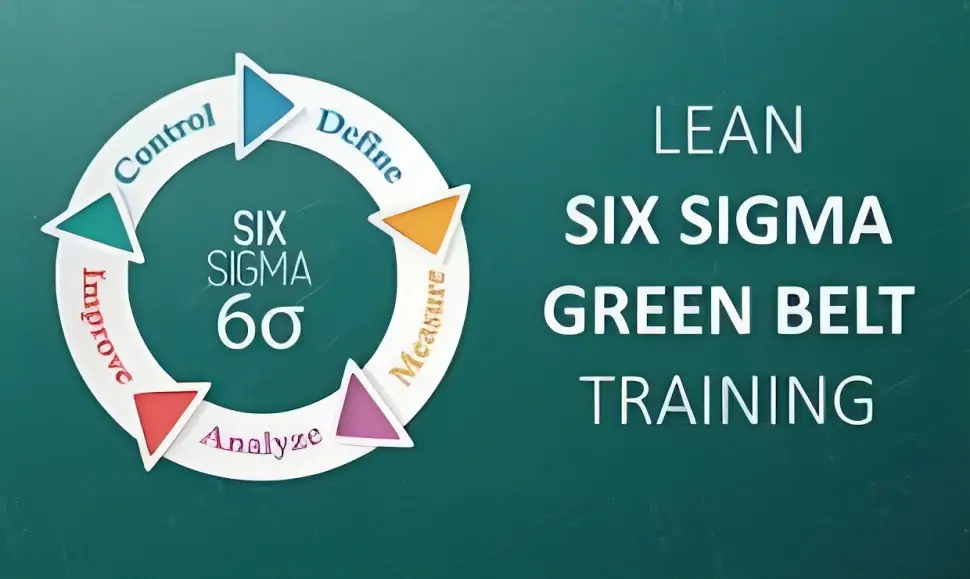
- Six Sigma: Six Sigma uses data and statistical analysis to reduce variation and defects, following the DMAIC (Define, Measure, Analyze, Improve, Control) framework.
Together, Lean and Six Sigma create a complete toolbox for process improvement, helping organizations deliver high-quality products and services efficiently.
Why Lean Six Sigma Green Belt (ICGB) Certification Matters
A Green Belt shows your ability in process improvement and data-driven decision-making. Here is why it matters:
A. Skill Enhancement: You gain the knowledge and tools to identify process issues, optimize operations and improve efficiency, with problem-solving techniques that apply across industries.

B. Career Advancement: Many employers value Lean Six Sigma skills, and a Green Belt can support new job opportunities and progression in your current role.
C. Cost Savings: Green Belts identify and remove waste, reduce defects and optimize processes, which saves money for their organizations.
D. Customer Satisfaction: Lean Six Sigma focuses on delivering high-quality products and services, so your work contributes directly to a better customer experience.
E. Data-Driven Decision-Making: Green Belts are skilled at collecting, analyzing and interpreting data, which is essential for informed decisions.
The IASSC Green Belt Exam at a Glance
| Item | Detail |
|---|---|
| Awarding body | IASSC, part of PeopleCert since 2020 |
| Prerequisites | None (training and project experience are recommended, not required) |
| Questions | 100 multiple-choice and true/false questions, about 20 from each DMAIC section |
| Duration | 3 hours |
| Format | Closed book and proctored; the IASSC reference document is provided |
| Passing approach | Minimum score of 70% |
| Delivery | Live online proctored exam through PeopleCert, available 24/7, or through IASSC accredited providers and training centres |
| Fee | USD 402 for the exam voucher on IASSC's official store (checked in October 2026; can change) |
| Validity | Recognized perpetually, with Current status for 3 years; a recertification exam keeps it Current |
Always confirm the latest details on the official IASSC website before booking. For a full cost picture, see our Green Belt cost breakdown.
Core Components of Lean Six Sigma Green Belt Certification Training
Green Belt training is designed to give you the knowledge and skills for process improvement. Its key components are:
A. Lean Principles: Waste reduction, value stream mapping and process flow.
B. Six Sigma Methodology: DMAIC, Six Sigma statistics, measurement system analysis and process capability.
C. Analysis Tools: Patterns of variation, hypothesis testing and regression, together with tools such as process mapping, fishbone diagrams and Pareto analysis.
D. Practical Application: Exercises that apply the tools to realistic processes. IASSC recommends real-world project experience, although it is not required for the exam.
E. Certification Exam: Passing the IASSC exam with at least 70% to validate your understanding.
F. Continuous Improvement: A mindset of continuous improvement and readiness to lead or support improvement initiatives.
BlueMorpho: Your Lean Six Sigma Green Belt Preparation Partner
BlueMorpho Learning Solutions is a training and enrollment partner. Our online program helps you prepare for the IASSC Green Belt exam; IASSC sets the exam and awards the certification.
A. Aligned to the IASSC Body of Knowledge: Our Green Belt course follows the five DMAIC sections that the exam uses.
B. Flexible Learning: Study online from anywhere. Talk to our advisors about the schedule that suits you.
C. Exam Guidance: Understand vouchers, online proctoring, Take2 and recertification before you book.
Who Should Pursue Lean Six Sigma Green Belt Certification?
The Green Belt is not limited to one industry or job role. It suits anyone who wants to improve their problem-solving skills, contribute to process improvement and advance their career, including:
A. Quality Assurance Professionals: Strengthen your ability to ensure product and service quality.
B. Project Managers: Use Lean Six Sigma principles to improve project efficiency and deliver results that meet customer expectations.
C. Operations Managers: Find and remove bottlenecks and inefficiencies in your processes.
D. Engineers: Design and improve processes for higher quality and lower cost.
E. Healthcare Professionals: Help reduce errors, improve patient outcomes and enhance the patient experience.
F. Business Analysts: Identify areas for improvement and recommend data-driven solutions.
Mastering Lean Six Sigma: Real-World Applications
Lean Six Sigma principles are versatile and apply in many industries:
A. Manufacturing: Optimize production processes, reduce defects and improve product quality.
B. Healthcare: Improve care processes, reduce patient waiting times and support better outcomes.
C. Finance: Streamline processes, reduce errors and improve customer service.
D. Service Sector: Improve customer experience, reduce service times and increase efficiency.
Continuous Growth After Your Green Belt
Earning your Green Belt is the beginning of your process improvement journey. To keep growing:
A. Continuous Learning: Keep up with new tools, methods and best practices.
B. Practical Application: Look for opportunities to lead or join improvement projects and show the value of Lean Six Sigma in practice.
C. Networking: Join forums, attend events and connect with other practitioners to share experience and ideas.
D. Mentorship: If possible, find an experienced Lean Six Sigma practitioner who can guide you on complex projects.
E. Keep Your Certification Current: IASSC certification is recognized perpetually, with Current status for three years. A 50-question, 1.5-hour recertification exam keeps it Current, and no CPD hours are required.
F. Training Others: Share Lean Six Sigma principles with colleagues so the knowledge spreads across your organization. When you are ready for the next level, consider the Lean Six Sigma Black Belt.
The Soft Skills of a Lean Six Sigma Green Belt
Technical skills are vital, but soft skills often decide how effective a Green Belt is. These interpersonal and communication skills complement your technical knowledge and make a real difference to your projects and your career.
a. Leadership Skills
Green Belts often lead small project teams. Leadership skills help you motivate team members, encourage collaboration and guide a project to completion.
b. Communication Skills
You must explain findings, recommendations and progress clearly to team members, stakeholders and executives who may not share your technical background.
c. Problem-Solving Abilities
Beyond the tools, Green Belts need critical thinking and creativity to find innovative solutions.
d. Change Management
Process improvements usually mean change. Understanding change management helps you handle resistance among team members and stakeholders.
e. Project Management
Green Belts are not necessarily project managers, but project management basics help keep improvement projects on time and within scope.
f. Customer Focus
Lean Six Sigma is ultimately about delivering value to customers. A customer-centric mindset helps you prioritize the improvements that matter most.
g. Conflict Resolution
Conflicts arise in any team. Resolving them constructively keeps projects moving and teams united.
h. Time Management
Green Belts often juggle several responsibilities, so good time management helps you balance study, project work and other commitments.
i. Emotional Intelligence
Understanding and managing your own emotions and those of others helps you build strong relationships and lead teams well.
j. Adaptability
The business landscape keeps changing. Being open to new ideas and approaches is essential for long-term success as a Lean Six Sigma Green Belt.
Conclusion
Lean Six Sigma Green Belt certification is more than a professional qualification; it is a commitment to excellence, efficiency and continuous improvement. With no prerequisites, a 100-question exam and a 70% pass mark, the IASSC Green Belt is an accessible first step for anyone serious about process improvement.
Invest in your future, strengthen your problem-solving skills and contribute to your organization's success. Explore our Lean Six Sigma Green Belt course or talk to an advisor to start your preparation with BlueMorpho Learning Solutions.